

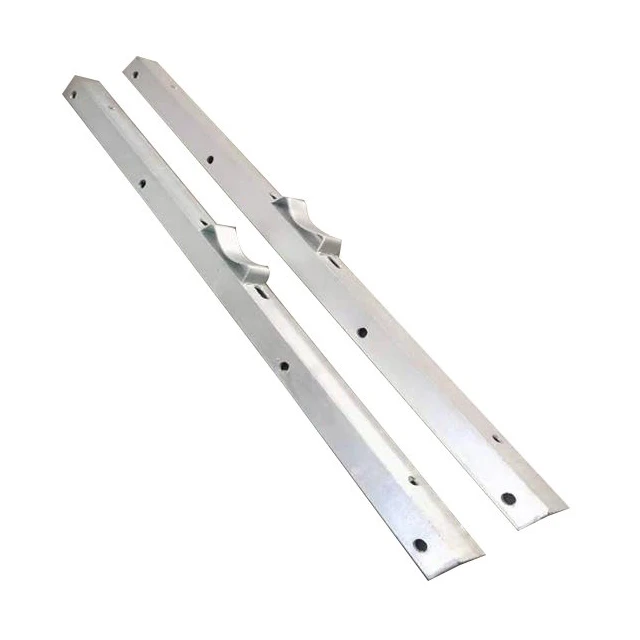
Double arming crossarms are steel structural members installed in paired configurations on utility poles when specified by an approved overhead line design. They provide mounting interfaces for insulators and associated pole-line hardware according to the required structure geometry.
Application-Specific Configurations: Designed around the specified pole arrangement, insulator positions, conductor layout, and connection details.
Individual or Complete Assemblies: Supply scope can include crossarms, braces, mounting plates, bolts, nuts, and washers when listed in the approved bill of materials (BOM).
Drawing-Based Selection: Dimensions, hole patterns, steel grades, structural requirements, and corrosion protection are established by project drawings and utility speczfications.
Product Types & Technical Specifications
Available configurations depend on the approved design and manufacturing requirements.
• Paired Steel Crossarms: Two crossarms configured according to the specified spacing, mounting positions, and connection interfaces.
• Braced Crossarm Assemblies: Crossarms supplied with specified braces and connection hardware where required by the design.
• Custom Crossarm Fabrication: Section profiles, dimensions, hole layouts, and mounting details reviewed against customer drawings before production.
Technical Specification Reference
|
Specification |
Requirement to Confirm |
|
Product configuration |
Paired crossarms or complete assembly |
|
Overall dimensions |
Length, width, height, and section profile |
|
Steel material |
Specified grade and governing material standard |
|
Material thickness |
Web, flange, plate, and brace thicknesses |
|
Hole configuration |
Diameter, spacing, edge distance, and orientation |
|
Connection details |
Bolt sizes, thread specifications, and mounting interfaces |
|
Structural requirements |
Applicable design loads and engineering criteria |
|
Corrosion protection |
Hot-dip galvanizing or other specified coating |
|
Inspection documentation |
Material certificates, dimensional reports, and coating records as required |
Materials & Manufacturing
Material Verification: Steel grades and material requirements are checked against the purchase order and approved drawings. Material certificates can be supplied when specified and available for the order.
Fabrication to Drawings: Cutting, punching, drilling, forming, and welding are performed according to the applicable manufacturing drawings and agreed acceptance criteria.
Hole and Interface Control: Hole positions, diameters, spacing, and mounting interfaces are checked against specified tolerances to support assembly compatibility.
Revision Management: Drawing revisions and approved engineering changes are documented before the affected production work proceeds.
Manufacturing tolerances and permissible fabrication variations should be agreed before production rather than assumed from a general product description.
Quality Control & Corrosion Protection
Inspection requirements should be defined according to the product design, purchase order, and applicable project standards.
Dimensional Inspection: Verify crossarm length, section dimensions, material thickness, hole locations, and mounting interfaces against approved tolerances.
Material and Fabrication Checks: Review material identification, fabrication dimensions, and welds where applicable against agreed inspection criteria.
Hot-Dip Galvanizing: Where specified, define the applicable galvanizing standard, coating acceptance requirements, and inspection method before production.
Traceability and Inspection Records: Material traceability, coating inspection reports, and third-party inspection can be included when agreed in the purchase order.
Standards clarification: ASTM A123/A123M and ISO 1461 are relevant hot-dip galvanizing standards for applicable iron and steel products. The correct standard and acceptance requirements must be confirmed for the specific component and project. Galvanized fasteners may require a separate applicable standard, such as ASTM A153/A153M, depending on the hardware type and specification.
Compliance should only be claimed when supported by the applicable production and inspection records.
Customization & Project Documentation
Crossarm profiles, dimensions, hole layouts, braces, and connection details are reviewed against customer drawings and project specifications.
Products can be quoted as individual components or BOM-defined kits, subject to the confirmed supply scope. Export packing and identification requirements should be agreed before dispatch.
Required documents may include approved drawings, material certificates, dimensional inspection reports, galvanizing records, packing lists, and shipping documents, as specified in the contract.
Bulk Orders & RFQ Requirements
Providing a complete technical scope helps procurement teams compare quotations and reduces the risk of specification gaps before production.
Please provide the following information for quotation:
Product Definition: Crossarm type, assembly configuration, dimensioned drawings, and revision numbers.
Quantity and Material: Required quantities, lot breakdown, steel grade, and material standard.
Dimensions and Connections: Section profile, thickness, hole pattern, mounting interfaces, and specified tolerances.
Structural and Coating Requirements: Applicable engineering criteria, galvanizing standard, coating acceptance requirements, and inspection scope.
Accessories and Documentation: Required braces, fasteners, BOM, material certificates, inspection reports, and any third-party inspection requirements.
Packaging and Delivery: Packaging instructions, destination, requested delivery date.
Before production, confirm the final drawings, material requirements, coating specifications, inspection criteria, supply scope, and delivery schedule in writing.
Frequently Asked Questions
Request a Project-Specific Quotation
Submit your crossarm drawings, required quantities, material specifications, galvanizing requirements, and delivery destination for technical review and quotation.
If drawings are not yet available, provide the required dimensions, pole configuration, mounting interfaces, and applicable utility specifications for an initial feasibility assessment.
Contact our sales team or submit an RFQ to confirm the technical scope, required documentation, and supply options for your project.
Hot Tags: double arming crossarm, China double arming crossarm manufacturers, suppliers, factory