

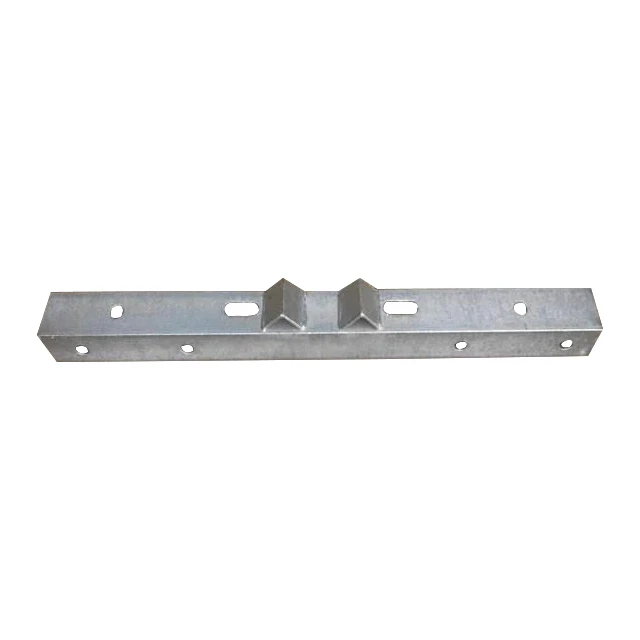
Angle steel cross arms are structural components used in utility pole assemblies to support insulators and associated overhead line hardware. Their dimensions, hole patterns, connections, and material specifications must match the approved pole structure design.
Key Selection Factors
• Structural Compatibility: Confirm the angle section, thickness, overall length, and connection details against the approved engineering drawing.
• Mounting Accuracy: Match hole diameters, spacing, and positions to the specified insulators, braces, bolts, and pole interfaces.
• Corrosion Protection: Specify the galvanizing standard and coating requirements according to project specifications and the installation environment.
• Engineering Requirements: Verify material grades, dimensional tolerances, structural loading criteria, and inspection requirements before production.
• Important: Voltage class alone does not determine crossarm suitability. Selection must follow the approved structural design, mechanical loading requirements, and mounting arrangement.
Product Types & Technical Specifications
Available Configurations
• Straight Angle Steel Cross Arms: For pole structures using a conventional crossarm arrangement specified in the engineering design.
• Braced Angle Steel Cross Arms: Incorporate braces or additional connections where required by the approved structure.
• Custom Angle Steel Cross Arms: Fabricated to customer drawings with project-specific dimensions, hole patterns, and mounting interfaces.
Technical Specification Table
|
Parameter |
Specification |
|
Product Type |
Straight, braced, or custom configuration |
|
Steel Section |
Equal-leg or unequal-leg angle |
|
Section Dimensions |
Leg widths and thickness according to drawing |
|
Overall Length |
As specified in the approved drawing |
|
Steel Grade |
Project-specified grade and material standard |
|
Hole Pattern |
Specified diameter, quantity, spacing, and position |
|
Connection Details |
Bolt arrangement, braces, and pole interfaces |
|
Surface Treatment |
Hot-dip galvanizing or other specified finish |
|
Dimensional Tolerances |
As defined by the approved drawing and applicable specifications |
|
Structural Requirements |
Project-defined loads and design criteria |
|
Quality Documentation |
Material certificates and inspection records, as agreed |
Materials & Manufacturing
Material Selection
• Steel Grade: Selected according to specified mechanical properties, applicable material standards, and fabrication requirements.
• Section and Thickness: Verified against the approved drawing. Substituting an angle section based only on external dimensions may affect structural suitability.
• Material Traceability: Material certificates and batch records can be provided where included in the agreed supply and documentation requirements.
Manufacturing Processes
• Cutting and Hole Processing: Prepare steel sections to the specified length, end geometry, hole diameter, and hole positions.
• Welding and Assembly: Fabricate braces and welded connections where required by the approved design and applicable welding requirements.
• Edge Finishing: Remove burrs and address fabrication defects before subsequent processing.
• Surface Preparation: Complete required fabrication and inspection before applying the specified corrosion protection.
Quality Control & Hot-Dip Galvanizing
Inspection and Verification
• Dimensional Inspection: Check section dimensions, thickness, overall length, and critical connection features against the approved drawing.
• Hole Position Inspection: Verify hole diameter, spacing, alignment, and mounting interfaces against specified requirements.
• Final Inspection: Check product identification, order quantity, agreed acceptance criteria, and required documentation before shipment.
Hot-Dip Galvanizing
• Hot-dip galvanizing provides a zinc coating to protect steel against atmospheric corrosion. Coating requirements should be specified according to the product, applicable standard, and project conditions.
• Applicable Standards: ASTM A123/A123M or ISO 1461, where applicable and specified for the product.
• Coating Verification: Check coating thickness, coverage, and surface condition against the agreed acceptance criteria.
• Component-Specific Requirements: Bolts, nuts, and other fasteners may require separate coating specifications and standards.
Drawing-Based Customization
Custom angle steel cross arms are manufactured according to approved engineering drawings, material specifications, and confirmed production capabilities.
Information Required for Technical Review
• Dimensions and Tolerances: Angle profile, thickness, overall length, hole patterns, and critical dimensional limits.
• Structural Details: Pole type, crossarm arrangement, brace configuration, and mounting interfaces.
• Material and Finish: Steel grade, material standard, galvanizing requirements, and coating acceptance criteria.
• Project Requirements: Applicable utility specifications, inspection points, marking, and documentation requirements.
Drawing Revision Control
Submit the latest approved drawing with a clear drawing number and revision identifier. Changes to dimensions, hole locations, material grades, or connection details must be reviewed and approved before production.
Frequently Asked Questions
Bulk Supply & RFQ Checklist
For Utility Projects, Distributors, and Contractors
Confirm technical requirements, quantities, packaging, inspection arrangements, and delivery schedules before order release. Repeat orders should reference the approved drawing revision and agreed product specifications.
Information to Include in Your RFQ
Product Details: Crossarm type, drawing number, revision, and required quantity.
Technical Specifications: Steel section, thickness, length, steel grade, hole pattern, and tolerances.
Corrosion Protection: Galvanizing standard, coating requirements, and acceptance criteria.
Quality Documents: Material certificates, inspection records, and third-party inspection requirements, where applicable.
Delivery Requirements: Packaging, product marking, destination country, delivery terms, and requested delivery date.
Hot Tags: angle steel cross arm, China angle steel cross arm manufacturers, suppliers, factory