

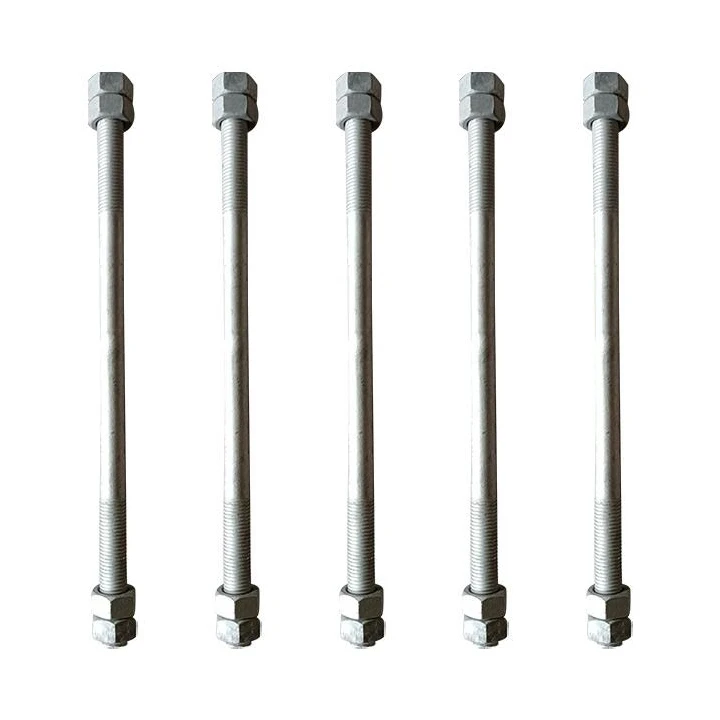
Thimble eye bolts are fastening components used in utility hardware assemblies where the eye geometry, threaded connection, and load requirements must match the application. For power distribution contractors, utility hardware distributors, importers, and project procurement teams, selecting the correct product requires verification of dimensional compatibility, material properties, mechanical requirements, and corrosion protection.
Custom configurations can be evaluated against approved engineering drawings and project specifications before production.
Product Types and Technical Specifications
Configuration Options
Straight and 45° configurations can be specified according to the required connection geometry. The correct orientation should be confirmed against the assembly drawing and intended load direction.
Key Selection Parameters
Bolt diameter, overall length, thread dimensions, eye geometry, material grade, and surface finish should be defined before ordering. These details determine dimensional compatibility with mating hardware and help establish the applicable inspection requirements.
|
Parameter |
Specification or Confirmation Required |
|
Configuration |
Straight or 45°; confirm orientation against drawing |
|
Bolt Diameter |
Nominal diameter and dimensional tolerance |
|
Overall Length |
Required length and measurement reference |
|
Thread Specification |
UNC or metric, pitch, thread class, and engagement length |
|
Eye Geometry |
Inside width, inside height, bearing surface, and profile |
|
Material |
Confirmed steel grade and applicable material standard |
|
Mechanical Requirements |
Specified tensile strength, proof load, or rated load, as applicable |
|
Surface Finish |
Hot-dip galvanizing or another specified coating |
|
Accessories |
Compatible nuts and washers, where required |
|
Governing Specification |
Approved drawing, applicable standard, or utility project specification |
Materials, Manufacturing and Quality Control
Material and Manufacturing Requirements
Material grade, forming process, thread production method, and heat treatment, where applicable, should be defined by the approved product specification. Actual manufacturing processes must be confirmed for the selected design.
Dimensional and Thread Inspection
Inspection can cover critical dimensions, eye alignment, thread pitch, thread fit, and mating-component compatibility according to the agreed inspection plan. Acceptance criteria should be established before production.
Mechanical Testing and Documentation
Required mechanical tests should follow the applicable product specification and agreed test method. Material certificates, mechanical test reports, and batch traceability records should be provided where available and included in the purchase agreement.
Corrosion Protection
For hot-dip galvanized products, confirm the applicable coating standard, coating requirements, inspection method, and acceptance criteria. ASTM A153/A153M or ISO 1461 should be specified only where applicable to the product and agreed requirements.
Customization and Project-Specific Requirements
Drawing-Based Customization
Customer drawings can be reviewed for dimensions, thread specifications, eye geometry, tolerances, and connection interfaces before quotation and production.
Material and Mechanical Requirements
Material grades and mechanical acceptance criteria should be confirmed against the project specification. Any required load ratings or special testing must be reviewed before manufacturing approval.
Accessories and Packaging
Matching nuts and washers can be specified where required. Packaging, labeling, corrosion protection during transport, and export packing arrangements should be agreed according to shipment and handling requirements.
Sample and Production Approval
Where sampling is required, confirm the sample specifications, inspection criteria, approval procedure, and production release conditions before placing the bulk order.
Applications and Selection Considerations
For utility pole and overhead line assemblies, confirm that the eye geometry and connection arrangement match the specified fitting and installation design.
Where the product is intended for guy-wire or tension-related assemblies, verify the permitted loading direction, required mechanical capacity, and compatibility with the connected hardware. Suitability must be established from the approved engineering specification rather than product dimensions alone.
For replacement parts and project-based purchasing, compare the existing component drawing, thread details, coating requirements, and acceptance criteria before approving an alternative product.
Frequently Asked Questions
Bulk Supply and RFQ Requirements
Information Required for an Accurate Quotation
Providing complete technical and commercial details helps reduce specification gaps during quotation and order confirmation.
• Product Configuration: Straight or 45° configuration, with drawing reference where available.
• Dimensions: Bolt diameter, overall length, thread length, and eye dimensions.
• Thread Requirements: UNC or metric standard, pitch, and thread class.
• Material and Mechanical Requirements: Steel grade, applicable material standard, and specified mechanical properties.
• Coating Requirements: Coating type, applicable standard, and acceptance criteria.
• Accessories: Required nuts, washers, and assembly components.
• Quality Documentation: Material certificates, test reports, inspection plans, and third-party inspection requirements, where applicable.
• Order Details: Sample quantity, trial order quantity, bulk quantity, and forecast demand.
• Delivery Requirements: Destination, required delivery date, packaging, labeling, and shipping terms.
Typical Procurement Workflow
Specification and Drawing Review → Technical Confirmation → Quotation → Sample Approval, if Required → Production and Agreed Inspection → Export Packing and Shipment
Production lead time, minimum order quantity, sampling arrangements, and shipping schedules should be confirmed against the actual product configuration and order volume.
Hot Tags: thimble eye bolt, China thimble eye bolt manufacturers, suppliers, factory