

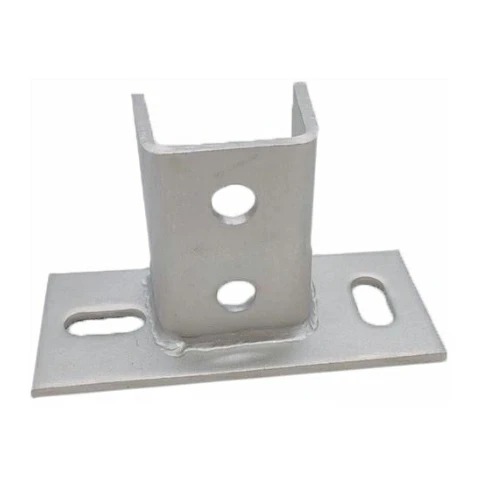
Solar Roof Hooks and Fixing Brackets for Pitched Tile Roof Projects
Tile roof PV mounting brackets connect solar mounting rails to the supporting roof structure beneath tiled roofing. The correct bracket depends on the tile profile, roof construction, fixing method, rail interface, and project-specific structural requirements.
Designed for solar mounting system manufacturers, distributors, wholesalers, and EPC contractors, this product range supports standard and drawing-based procurement for residential and commercial pitched-roof solar installations.
Product Types and Applications
Fixed Tile Roof Hooks
Designed for roof configurations with defined installation geometry. Dimensions and fixing positions must match the tile profile, supporting structure, and selected rail system.
Adjustable Tile Roof Hooks
Provide a specified range of mechanical adjustment to accommodate installation tolerances. The available adjustment range and permitted installation conditions must be confirmed for each model.
Profile-Specific and Custom Brackets
Developed for particular tile geometries, mounting clearances, or rail interfaces. Custom designs can be evaluated against dimensioned drawings, roof details, or physical samples.
Typical Applications
Residential pitched tile roofs
Commercial buildings with tiled roofing
Distributed rooftop photovoltaic installations
Technical Specifications and Selection
Bracket selection should begin with roof compatibility and structural fixing requirements, followed by dimensional, material, and rail-interface verification.
|
Parameter |
Specification to Confirm |
|
Roof tile type |
Clay, concrete, flat, curved, or other profiles |
|
Bracket dimensions |
Length, width, height, hook reach, and clearance |
|
Material |
Exact stainless steel, carbon steel, or aluminum alloy grade |
|
Material thickness |
Drawing-defined thickness |
|
Hole and slot pattern |
Diameter, slot dimensions, and center-to-center spacing |
|
Adjustment range |
Available travel for adjustable models |
|
Rail compatibility |
Rail profile, connection method, and fastener dimensions |
|
Surface treatment |
Specified coating, passivation, or anodizing |
|
Fasteners |
Type, dimensions, strength grade, and corrosion compatibility |
|
Project requirements |
Design loads, installation environment, and applicable standards |
Structural Compatibility and Roof Protection
Fixing to the Supporting Structure
The fixing method and fasteners must be suitable for the actual roof structure and verified against project design requirements. Tile material alone does not establish structural suitability.
Tile Clearance and Contact
Check tile thickness, overlap, local geometry, and installation clearance. The installed bracket should not create unintended pressure points or interfere with the surrounding tiles.
Wind and Snow Loads
Bracket, rail, fastener, and supporting-structure requirements must be assessed using the applicable project design loads and engineering criteria. Do not infer load capacity from bracket dimensions or material grade alone.
Roof Waterproofing
Confirm roof penetrations, flashing details, and waterproofing requirements for the specific roof assembly. Bracket compatibility by itself does not establish waterproofing performance.
Materials and Corrosion Protection
Stainless Steel
Grades such as SUS304 may be considered where their mechanical and corrosion properties suit the project environment. Confirm the exact grade and required material documentation.
Coated Carbon Steel
Specify the coating system, required coating thickness, edge protection, and inspection criteria according to the intended exposure conditions.
Aluminum Alloy
Alloys such as 6005-T5 may be considered for suitable bracket designs. Confirm the exact alloy, temper, dimensions, and surface finish against the design requirements.
Corrosion Compatibility
Assess moisture retention, coastal exposure, industrial pollutants, and contact between dissimilar metals. Where required, specify suitable isolation measures and compatible fasteners.
Manufacturing and Quality Control
Dimensional Inspection
Check critical dimensions, bend geometry, hole positions, slot sizes, and mounting clearances against the approved drawing.
Material and Surface Verification
Define the required material certificates, coating or anodizing specifications, and applicable inspection records before production.
Batch Consistency and Traceability
Agree on inspection frequency, acceptance criteria, batch identification, and record retention before bulk manufacturing. Maintain revision-controlled drawings for repeat orders.
Quality Documentation
Depending on the order requirements, documentation may include:
Material Test Certificates (MTC), where specified
Dimensional inspection reports
Surface-treatment or coating-thickness records
Applicable test reports and conformity documentation
Actual inspection capabilities and available documents should be confirmed before order placement.
Customization and OEM Supply
Drawing-Based Customization
Bracket dimensions, hook geometry, material thickness, hole patterns, rail interfaces, and surface finishes can be reviewed against customer drawings or samples.
Technical Review
Provide roof tile drawings or photographs, supporting-structure details, rail drawings, fixing requirements, and project location. These inputs help identify compatibility issues before sample approval.
OEM and Packaging Requirements
Where supported, confirm product marking, private-label packaging, carton quantities, shipping marks, and documentation requirements before production.
Sample and Revision Control
Approve the critical dimensions, interfaces, and finishes before mass production. Use an agreed drawing revision and sample reference to control repeat orders.
Standards and Compliance
Project-Specific Requirements
Applicable structural design standards, mounting-system requirements, and conformity obligations depend on the destination market, product configuration, and installation design.
Standards and Certification Review
• ISO 9001: Relates to quality management systems; it does not independently establish product load capacity or certification.
• AS/NZS 1170: Relevant provisions may apply to structural design actions and project load assessment.
• UL 2703: Applicability depends on the relevant PV mounting and bonding configuration and the scope of evaluation.
• CE marking: Applicability must be determined from the product's intended use and applicable EU legislation.
Do not assume that an individual bracket is certified or compliant simply because a related mounting system or manufacturer holds a certificate. Confirm the applicable scope and supporting documentation for the actual product.
Bulk Procurement and RFQ Checklist
For an accurate quotation and technical review, please provide:
• Roof details: Tile type, dimensions, profile drawings, or site photographs.
• Structural fixing: Rafter or other supporting-structure details and the proposed fixing method.
• Mounting interface: Rail drawings, connection dimensions, and fastener requirements.
• Product specifications: Material grade, thickness, dimensions, and surface finish.
• Project conditions: Installation location, environmental exposure, and design load requirements.
• Order quantity: Required quantities by model and expected repeat-order volume.
• Quality requirements: Inspection criteria, certificates, test reports, and traceability needs.
• Delivery requirements: Destination, packaging specifications, target delivery date, and sample approval milestones.
Before Bulk Production
Confirm the approved drawing revision, sample acceptance criteria, applicable inspection requirements, MOQ, production lead time, packaging, and delivery terms in the quotation or purchase order.
Frequently Asked Questions
Request a Technical Review or Bulk Quotation
Send your product drawings, roof tile details, rail interface dimensions, material requirements, and estimated order quantity for review.
The quotation should confirm model compatibility, agreed specifications, required documentation, sample approval, MOQ, lead time, and delivery terms before bulk production.
Hot Tags: tile roof pv mounting brackets, China tile roof pv mounting brackets manufacturers, suppliers, factory, photovoltaic cable connector, PV module cable, PV panel bonding hardware, PV panel connector, solar cable holder, solar electrical accessories